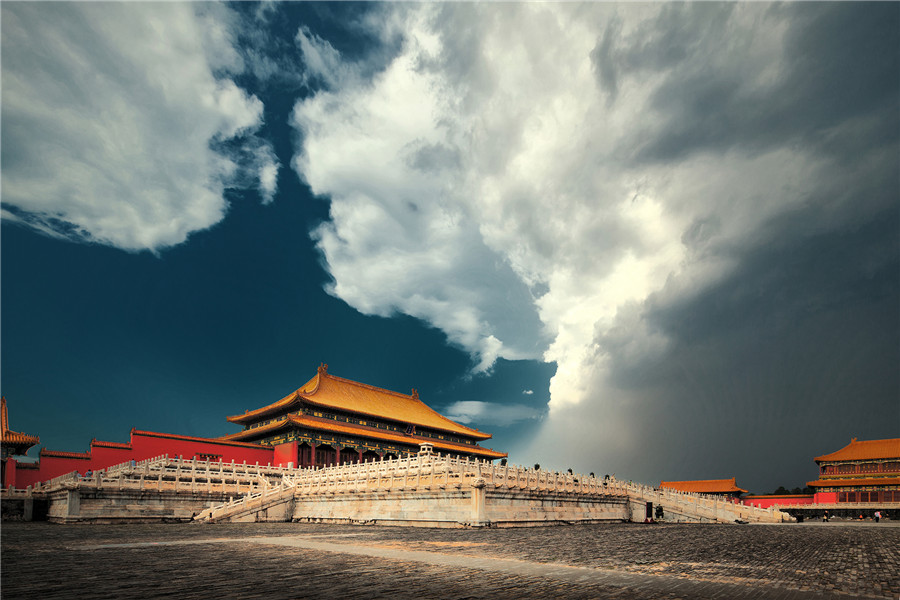
The Palace Museum
Introduction
The Palace Museum, known as the Forbidden City, is a cultural and historical gem located in the heart of Beijing, China. As one of the most popular tourist destinations in the capital, it attracts millions of visitors annually, eager to explore its vast collection of Chinese art, history, and architecture. The museum is housed within the former imperial palace of the Ming (1368-1644) and Qing (1644-1911) dynasties, covering approximately 720,000 square meters and measures 961 meters from north to south and 760 meters from east to west. Its significant status is highlighted by its designation as a UNESCO World Heritage Site in 1987. The Palace Museum serves not only as a key cultural institution but also as a testament to the grandeur and historical significance of ancient Chinese civilization.
Architecture
Layout
The architectural layout of the Palace Museum exemplifies traditional Chinese palatial design, characterized by its symmetry, grandeur, and intricate detailing. The Forbidden City comprises numerous architecturally significant buildings, dating back to the 15th century, with structures artfully arranged around a central axis. This design reflects the harmonious principles of Chinese cosmology, where balance and order govern spatial arrangements. Visitors can explore a labyrinth of halls, gardens, and courtyards, each offering a glimpse into the imperial lifestyle and opulence that once defined the residence of China's emperors.
Features
The architectural features of the Palace Museum are representative of traditional Chinese style, showcasing exquisite craftsmanship and artistry. Iconic elements include golden glazed roof tiles, red-painted walls, and intricate wood carvings, all contributing to the visual splendor of the complex. The Forbidden City also boasts several towering gates and grand halls, such as the Hall of Supreme Harmony, which served as the throne room for the emperor. These architectural marvels are not only aesthetically impressive but also rich in symbolic meaning, reflecting the cultural and historical significance of the site.
Collections
The Palace Museum houses an extensive collection of 1.8 million pieces of artwork and artifacts, showcasing the splendors of Chinese traditional culture. These collections primarily consist of legacies from the Qing imperial household, offering a comprehensive view of the imperial taste in art and aesthetics. The museum's collections cover a wide range of forms, including paintings, calligraphy, ceramics, sculpture, textiles, rare books, historical archives, jade carvings, and decorative crafts from pre-historic times to the 19th century. Each piece reflects the rich cultural heritage and artistic achievements of China, making the museum one of the most prestigious in the world.
Exhibitions
The Palace Museum hosts a variety of exhibitions throughout the year, featuring both permanent and temporary displays. Permanent exhibitions include bronzes, ceramics, architecture, and the archives of the Qing Dynasty Council of State, providing visitors with a deep dive into the historical and cultural aspects of the era. Temporary exhibitions, such as those showcasing paintings and calligraphic works, are often mounted in spring and summer, with strict requirements for temperature and humidity to preserve the fragile media. These exhibitions offer an opportunity to witness the evolution of Chinese art and culture, reflecting the diverse and dynamic history of the nation.
Cultural Significance
The Palace Museum holds immense cultural significance, serving as a symbol of China's historical civilization and artistic heritage. It epitomizes the grandeur and splendor of the Ming and Qing dynasties, while also representing the architectural and cultural achievements of ancient China. As a UNESCO World Heritage Site, it is recognized globally as a testament to the historical continuity and cultural richness of China. The museum's collections and exhibitions contribute to the understanding and appreciation of Chinese history, making it a vital institution for both cultural preservation and education.
Conservation Efforts
The conservation efforts at the Palace Museum are focused on preserving the cultural heritage and artifacts housed within its walls. The museum boasts China's largest and most complete cultural heritage protection and research team, employing advanced monitoring and digital technologies to safeguard its treasures. This includes the digitization of cultural relics, development of high-precision three-dimensional models, and implementation of a comprehensive monitoring and response system. These efforts ensure the long-term preservation of the museum's collections, allowing future generations to appreciate and study China's rich cultural legacy.
Visitor Information
The Palace Museum welcomes visitors year-round, offering an enriching experience through its vast collections and exhibitions. It is open daily, with varying hours depending on the season, and is closed on Mondays except for national holidays. General admission fees are 60 yuan from April to October and 40 yuan from November to March. Visitors can book tickets online and explore the museum at their leisure, enjoying the panoramic views from the palace walls and the intricate details of the architectural complex. The museum also offers virtual tours, allowing visitors to explore the Forbidden City from anywhere in the world.








